


Do You Need a Shopify Agency? A Guide for Growing B2B & D2C Businesses
14 Sep 2026
 Aaron Pallares

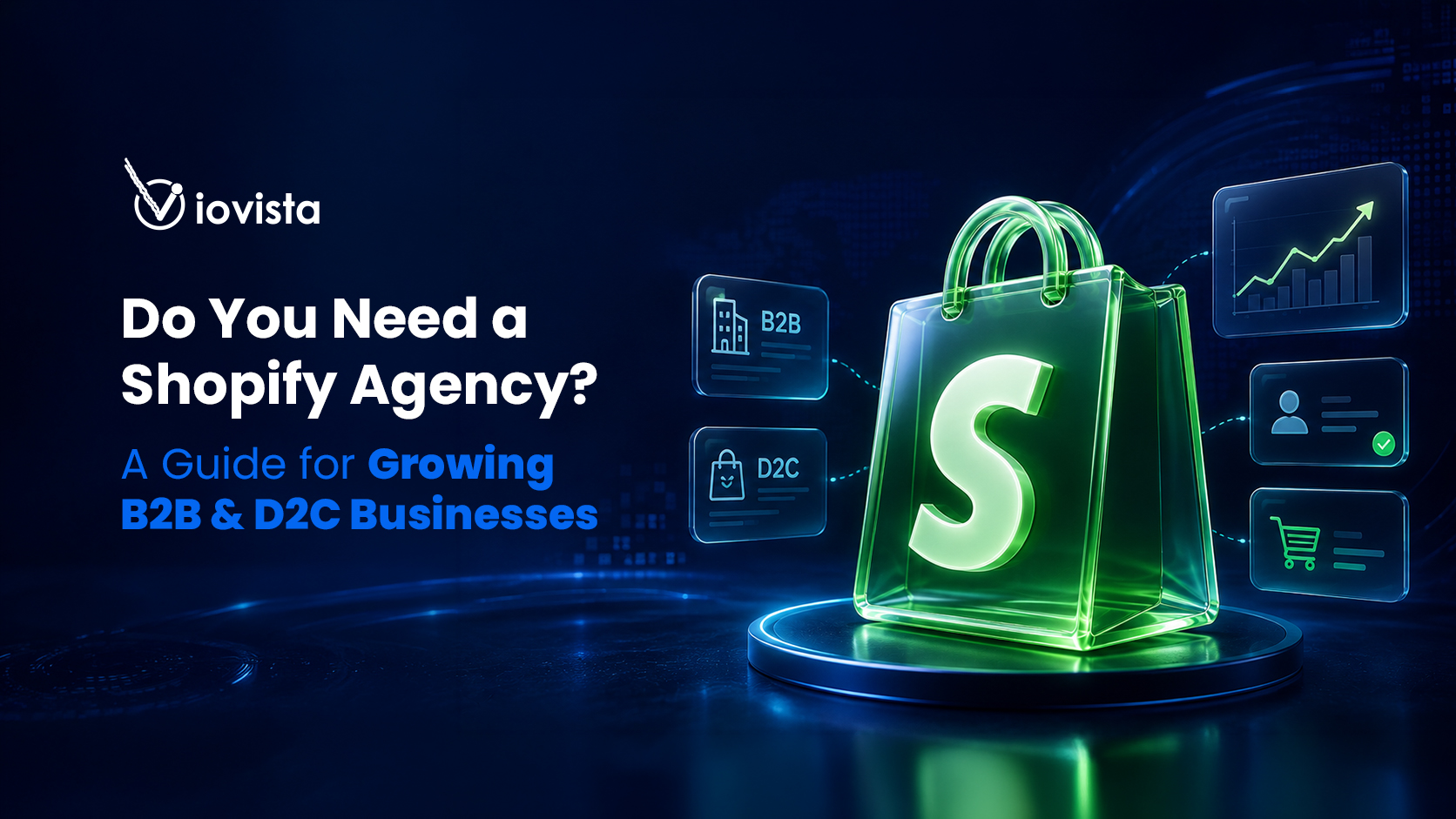
Launching a Shopify store is easy. Keeping it running smoothly as your business grows is a different story.
Most brands start on Shopify because it’s fast to set up and simple to manage. But as order volume climbs, product catalogs expand, and customers expect more personalized checkout, real-time inventory, and a smooth mobile experience, the store that once felt effortless can start to feel fragile. Themes break under heavy customization. Apps conflict with each other. What starts as a “quick fix” can easily turn into a week of debugging.
This is the point where many growing businesses start asking a different question. Not “how do I build a Shopify store?” but also do I need to hire a Shopify agency?
This article walks through why that question comes up, what a professional Shopify agency actually does, when working with one makes sense (and when it doesn’t), and how to evaluate an agency if you decide to bring one on.
Why Shopify Stores Get Complicated as You Grow
A new Shopify store is simple by design: a theme, a handful of apps, and a small product catalog. That simplicity is exactly why so many businesses choose it to start.
But growth changes the equation. A few hundred SKUs becomes a few thousand. A single sales channel becomes five. Customers start asking for wholesale pricing, net-30 terms, or custom quotes none of which a standard Shopify theme handles out of the box. This kind of shift is one of the key drivers of digital transformation in B2B eCommerce heading into 2026: marketing wants faster page loads and better A/B testing, while operations wants the store connected to the ERP instead of someone re-entering orders by hand.
None of these problems show up on day one. They appear gradually, as small workarounds pile up into a store that’s difficult to maintain and expensive to change. That’s usually when a business starts looking for professional Shopify development help instead of patching things together in-house.
What a Professional Shopify Agency Actually Does
A professional Shopify agency does far more than simply build Shopify stores.” A professional agency brings the specialized expertise needed to handle problems that go well beyond installing apps and picking a theme:
- Custom Functionality: Building features Shopify doesn’t offer natively, from custom pricing logic to unique product configurators.
- Third-party Integrations: Connecting Shopify to your ERP, CRM, and PIM systems through dedicated eCommerce integration and ERP integration work, so data flows automatically instead of being entered manually.
- Store Architecture: Structuring collections, metafields, and navigation so the store stays manageable as the catalog grows, sometimes moving toward a headless commerce approach for more flexibility.
- Performance Optimization: Diagnosing why pages load slowly and fixing the underlying cause, not just the symptom.
- B2B and Wholesale Requirements: Customer-specific pricing, quote workflows, and account-based ordering, covered in more depth in our rundown of essential B2B commerce features.
- Platform Migration: Moving from Magento, WooCommerce, or another legacy platform to Shopify (or Shopify Plus) without losing SEO rankings or historical data; see our comparison of Shopify vs. Magento if you’re weighing platforms.
- Multi-store and International Setups: Managing multiple storefronts, currencies, or markets from one back end.
- Ongoing Maintenance and Support: Keeping apps updated, monitoring uptime, and fixing issues before customers notice them, often through an ongoing website support and maintenance engagement.
The common thread is technical depth. These are the kinds of projects where a wrong turn can be expensive, a botched migration can tank your search rankings overnight, and a poorly built integration can quietly corrupt inventory data for months before anyone notices.
Shopify Agency vs. In-House or DIY Development
Hiring an agency isn’t automatically the right call for every business. It depends on what you’re trying to accomplish and what resources you already have.
| Factor | DIY/In-House | Professional Shopify Agency |
| Expertise | Limited to what your team already knows | Broad experience across many stores and edge cases |
| Development Speed | Slower learning curve on unfamiliar problems | Faster patterns and solutions already built before |
| Customization | Fine for simple changes; risky for deep customization | Comfortable with complex and custom builds |
| Integrations | Difficult without dedicated developers | Core competency, especially ERP/CRM/PIM |
| Scalability | Can work well at small scale | Built for stores that expect to keep growing |
| Ongoing Maintenance | Falls on your team and competing with other priorities | Often included as an ongoing service |
| Risk | Higher risk of costly mistakes on complex projects | Lower risk, but requires vetting the right partner |
| Cost | Lower upfront cost | Higher upfront cost, often lower total cost of ownership |
If your store is simple, your catalog is small, and you have someone comfortable with Shopify’s admin and basic Liquid customization, DIY can work fine there’s no need to overspend on an agency for a straightforward store. But once you’re dealing with integrations, custom logic, B2B requirements, or a migration, the calculation usually flips. The cost of getting it wrong tends to outweigh the cost of hiring an agency.
Signs Your Business May Need Professional Shopify Help
A few patterns tend to show up right before a business decides to bring in outside expertise:
- Your team is spending more time fixing the store than running the business a sign your legacy B2B eCommerce setup may be slowing you down
- Apps are starting to conflict with each other or slow the site down
- You need to connect Shopify to an ERP, CRM, or inventory system, which usually calls for dedicated B2B eCommerce solutions
- B2B customers are asking for pricing or ordering options Shopify doesn’t support natively
- You’re planning a platform migration from another system or moving up to Shopify Plus
- Site speed and conversion rates are trending in the wrong direction
- You’re expanding into new markets, currencies, or storefronts
If more than one or two of these sound familiar, it’s usually worth having a conversation with a professional Shopify development team, even if you’re not ready to commit yet.
How to Choose the Right Shopify Agency
Not all Shopify agencies are built the same, and the wrong fit can cost you as much time as doing it yourself. A few things are worth checking before you sign a contract:
- Relevant Experience: Have they worked on stores with your level of complexity B2B pricing, multi-warehouse fulfillment or high SKU counts?
- Integration Capabilities: Can they show real examples of connecting Shopify to the systems you use?
- Technical Depth Beyond Themes: Ask how they’d approach a specific problem you’re facing. A theme shop may struggle here; a development agency won’t.
- B2B and B2C Experience: Depending on which one describes your business.
- Development process. Do they have a clear process for scoping, building, testing, and launching or is it unstructured?
- QA and Testing Practices: Complex builds need real testing before launch, not just a quick click-through.
- Post-launch Support: What happens after launch? Ongoing maintenance, or a handoff with no support?
- Portfolio and Case Studies: Look for stores similar in scale and complexity to yours, not just polished design work.
- Communication Style: You’ll be working closely with this team to make sure it’s a good fit before committing to a longer engagement.
Agencies that can speak fluently about integrations, architecture, and B2B requirements, not just design and theming are usually the ones equipped to handle a growing store’s real technical needs. Whether you need a full store build or complex system integrations, our Shopify Plus development services are designed to support your enterprise growth.
When Shopify Plus Enters the Picture
For businesses hitting the ceiling of standard Shopify high order volume, complex B2B requirements, or the need for deeper platform-level customization the next step is often Shopify Plus development expertise. Shopify Plus opens up capabilities standard Shopify doesn’t offer, including checkout customization, advanced automation, and infrastructure built for high-growth and enterprise stores.
This is usually where the value of a professional agency compounds. A team that stays current on platform changes like the recent Shopify Summer 2025 update can help you evaluate whether you actually need Shopify Plus or whether your current problems can be solved without the jump. That kind of guidance is often more valuable than simply recommending an upgrade you don’t yet need.
If your business is running into the kinds of technical, integration, or scalability challenges described above, it’s worth having a conversation with a team that works in this space every day. ioVista’s Shopify Plus development services are built around exactly this: custom development, integrations, and migrations for growing B2B and DTC brands.
In Conclusion
Shopify makes it easy to launch a store; it doesn’t automatically make it easy to run one at scale. As order volume grows, integrations multiply, and customers expect more, the gap between what your team can maintain and what your store actually needs tends to widen.
That gap is exactly what a professional Shopify agency is built to close: the technical depth for custom development and integrations, the experience to avoid costly migration mistakes, and the ongoing support to keep a growing store stable. Not every business needs that help today, but recognizing the signs of early slowing performance, manual data entry, and unmet B2B requirements makes it much easier to bring in the right partner before those problems start costing you sales.
If this sounds familiar, it’s worth having a conversation before today;s workarounds become tomorrow’s costly technical debt.
Frequently Asked Questions
Why should a business hire a Shopify agency instead of building in-house?
An agency brings experience across many Shopify stores, which usually means faster development, fewer costly mistakes, and access to skills like ERP integrations or performance tuning that most in-house teams don’t have on staff.
What does a Shopify agency actually do?
Beyond design and theming, a professional agency handles custom development, third-party integrations, platform migrations, performance optimization, and ongoing technical support.
When should I hire a Shopify agency?
Common triggers include planning a migration, needing ERP/CRM integrations, hitting performance or scalability limits, or requiring B2B functionality Shopify doesn’t offer out of the box.
Is it better to use an agency or build in-house?
It depends on the complexity. Simple stores can often be managed in-house. Stores with custom integrations, B2B requirements, or growth plans typically benefit from professional expertise.
How much technical expertise does a growing Shopify store need?
More than most businesses expect. Integrations, custom checkout logic, and performance tuning require development skills beyond Shopify’s standard admin tools.
What should I look for when choosing a Shopify agency?
Relevant experience with stores like yours, real integration capabilities, a clear development and QA process, and solid post-launch support.
Do I need Shopify Plus to work with a professional agency?
No. Agencies work with businesses on standard Shopify and Shopify Plus alike; the right platform depends on your order volume, customization needs, and growth plans.
How can a Shopify agency help with integrations and customizations?
Agencies with integration experience can connect Shopify to your ERP, CRM, or PIM systems and build custom functionality that off-the-shelf apps can’t provide, reducing manual work and data errors.
Can a Shopify agency improve SEO?
Yes. A technical agency optimizes site speed, clean code, metadata structure, and mobile usability, while ensuring proper 301 redirects during migrations so you maintain search rankings.
How long does a Shopify development project take?
Simple setup or theme customization typically takes 2 to 4 weeks, while full custom builds, platform migrations, or complex ERP integrations usually take 8 to 16 weeks.
Can a Shopify agency build custom apps?
Yes. Agencies can build private or custom Shopify apps tailored to your specific workflows, pricing logic, inventory needs, or third-party integrations that off-the-shelf apps can’t handle.
When should I upgrade to Shopify Plus?
Consider upgrading when your store hits high transaction volumes, requires custom checkout logic, demands advanced B2B/wholesale features, or needs dedicated API limits for enterprise integrations.
How much does it cost to hire a Shopify agency?
It depends on the project scope, custom design needs, and technical complexity. Simple setups require a smaller investment, while custom enterprise builds or migrations require a larger commitment. Many agencies also offer ongoing retainer plans.
Aaron Pallares

Aaron Pallares leads Customer Success and Strategic Partnerships at ioVista, helping businesses transform their eCommerce initiatives into sustainable growth. He collaborates with merchants, technology partners, and cross-functional teams to optimize digital commerce strategies, improve customer adoption, and build high-performing partner ecosystems. His expertise includes customer success, platform optimization, partner enablement, and scalable growth strategies for modern B2B and B2C commerce.
Popular Posts
-
Adobe Commerce, Shopify
Do You Need a Shopify Agency? A Guide for Growing B2B & D2C Businesses
Aaron Pallares
14 Sep 2026 -
Update
Adobe Commerce APSB26-138: What Businesses Need to Know About the Security Update
Albert Wood
10 Sep 2026 -
Adobe Commerce
Adobe Commerce APSB26-146: Critical Security Fixes Require Urgent Action
Albert Wood
08 Sep 2026 -
Adobe Commerce, SEO
Magento 2 SEO Guide for 2026: Advanced Strategies to Boost Rankings and Performance
Albert Wood
07 Sep 2026 -
-
-
-
Shopify
When Commerce Policies Change: What Regulated Merchants Can Learn from Shopify's Vape Decision
Albert Wood
18 Aug 2026 -
Adobe Commerce
Adobe Commerce APSB26-92: Security Risks, Affected Versions, and Next Steps
Albert Wood
13 Aug 2026 -
-
News
How ShopWare and ioVista are Driving Digital Transformation in the 2A Community!
Aaron Pallares
04 Aug 2026 -
News
Why ioVista Became a Shopware Partner: Building the Future of Digital Commerce Through Innovation and Collaboration
Aaron Pallares
28 Jul 2026 -
Adobe Commerce, Magento, Update
Critical Adobe Commerce Security Update APSB26-73: Key Highlights

Mike Patel
15 Jul 2026 -
AI and ML, Google Updates
Google Marketing Live 2026: Everything You Need to Know about Google's AI Advertising Revolution
Mike Patel
16 Jun 2026 -
Adobe Commerce
Critical Adobe Commerce Security Update APSB26-49: Key Highlights
Mike Patel
15 May 2026 -
Adobe Commerce
Adobe Commerce 2.4.9 is Here: Features, Security, and Platform Enhancements
Mike Patel
15 May 2026 -
-
-
-
AI and ML, AIO, B2B
Machine-Readable B2B: The Hidden Layer that Wins AI Visibility
Mike Patel
14 Apr 2026 -
B2B
AI-Ready Catalogs: Turning Your Product Data into a Recommendation Engine
Mike Patel
09 Apr 2026 -
-
-
AIO, SEO
LLM Optimization: How Large Language Models Discover, Rank, and Cite Content
Mike Patel
26 Mar 2026 -
Migration, SEO
SEO Website Migration Checklist: Guide to Protect Your Rankings & Traffic in 2026
Mike Patel
13 Mar 2026 -
Adobe Commerce, Update
Adobe Commerce Security Update APSB26-05: Everything You Need to Know
Mike Patel
12 Mar 2026 -
AIO, SEO
LLM SEO vs GEO vs SEO: What Actually Matters for eCommerce Brands in 2026
Mike Patel
12 Mar 2026 -
Adobe Commerce
Are You Still on Adobe Commerce 2.4.6? Now is the Time to Upgrade
Mike Patel
24 Feb 2026 -
-
-
-
-
AI and ML, SEO
AI-SEO Is Changing Everything in 2026: 5 Strategies to Rank and Stay Relevant
Mike Patel
10 Dec 2025 -
-
E-Commerce
What SEMA 2025 Revealed: The Digital Transformation Race in the Automotive Aftermarket Industry
Mike Patel
20 Nov 2025 -
Adobe Commerce
Most Exciting Update: Hyvä Theme is Now Open Source and FREE
Paren Sutreja
17 Nov 2025 -
News, Shopify
Breakthrough Update: Managing Product Variants on Shopify Got Easier with 2048 Variants
Mike Patel
11 Nov 2025 -
Adobe Commerce, Update
Critical Adobe Commerce Vulnerability (CVE-2025-54236): What Merchants Need to Know
Mike Patel
27 Oct 2025 -
Adobe Commerce, Update
Adobe Commerce Security Update APSB25-94: What You Need to Know
Mike Patel
15 Oct 2025 -
Shopify
The Quiet Revolution: Why the Shopify x ChatGPT Partnership Changes Everything in eCommerce
Mike Patel
03 Oct 2025 -
Adobe Commerce
Adobe Sensei AI in eCommerce 2025: Transforming Digital Commerce
Mike Patel
19 Sep 2025 -
Adobe Commerce
Critical Adobe Commerce Security Update APSB25-88: Key Highlights
Mike Patel
10 Sep 2025 -
Shopify
Shopify API Deprecations and New Features: A Merchant's Guide to Upcoming Changes
Mike Patel
08 Sep 2025 -
AI and ML
Agentic AI for Business - Drive Success with Intelligent Automation
Mike Patel
27 Aug 2025 -
Adobe Commerce, Update
Adobe Commerce Security Update APSB25-71: Essential Security Fixes You Need to Know
Mike Patel
13 Aug 2025 -
News, Shopify
Shopify Summer Edition 2025: A Technical Insight into the Latest Update
Mike Patel
08 Aug 2025 -
-
Adobe Commerce, Magento
Adobe Commerce Security Update APSB25-50: Key Highlights
Mike Patel
11 Jun 2025 -
Adobe Commerce, B2B, E-Commerce
B2B Excellence Starts with Adobe Commerce (Magento) - Not WooCommerce
Mike Patel
03 Jun 2025 -
AI and ML, B2B, Digital Marketing, E-Commerce, Web Development
AI and ML in B2B: A Vision for the Future of Commerce by 2025
Mike Patel
27 May 2025 -
B2B, Digital Marketing, E-Commerce, Web Development
20 Next-Gen B2B eCommerce Features that will Dominate in 2025
Mike Patel
20 May 2025 -
B2B, BigCommerce, E-Commerce, Web Development
WooCommerce to BigCommerce Migration Fuels Your B2B eCommerce Growth
Mike Patel
06 May 2025 -
Adobe Commerce, E-Commerce, Migration, News, Web Development
Adobe Commerce SaaS: How Will It Empower Your eCommerce Business?
Mike Patel
22 Apr 2025 -
B2B, E-Commerce, Web Development
Leverage ERP Integration to Scale Your B2B eCommerce Business in 2025
Mike Patel
15 Apr 2025 -
Adobe Commerce, E-Commerce, Magento, News, Web Development
Adobe Commerce Security Update APSB25-26: All You Need to Know
Mike Patel
10 Apr 2025 -
Adobe Commerce, E-Commerce, Magento, News, Web Development
Adobe Commerce 2.4.8 Release: Key Highlights
Mike Patel
10 Apr 2025 -
B2B, E-Commerce, Migration, Web Development
Why Scaling Business Should Migrate WooCommerce Stores to Shopify
Mike Patel
08 Apr 2025 -
Adobe Commerce, B2B, E-Commerce, Magento, Web Development
Why Does Adobe Commerce (Magento) Lead the Way of B2B eCommerce
Mike Patel
18 Mar 2025 -
B2B, Digital Marketing, E-Commerce, Web Development
Gain a Competitive Edge by Turning Obstacles into Opportunities: B2B Digital Transformation in 2025
Mike Patel
11 Mar 2025 -
AI and ML, B2B, Digital Marketing, E-Commerce, Web Development
10 Key Drivers of Digital Transformation in B2B eCommerce for 2025
Mike Patel
04 Mar 2025 -
B2B, E-Commerce, Web Development
5 Leading eCommerce Platforms to Build Scalable B2B Customer Portals
Mike Patel
25 Feb 2025 -
Google Updates, News, SEO
Google Search Ranking Volatility: All You Need to Know
Mike Patel
18 Feb 2025 -
Adobe Commerce, E-Commerce, Magento, News, Web Development
Adobe Commerce Security Update APSB25-08: All You Need to Know
Mike Patel
13 Feb 2025 -
B2B, E-Commerce, Web Development
7 Strategic Benefits of an Online B2B Customer Portal
Mike Patel
11 Feb 2025 -
B2B, E-Commerce, Web Development
What Makes a Great Online B2B Customer Portal? Top 10 Features to Know
Mike Patel
04 Feb 2025 -
B2B, E-Commerce, Web Development
Legacy B2B eCommerce Systems Slowing You Down? It's Time for Modernization
Mike Patel
28 Jan 2025 -
B2B, E-Commerce, Manufacturing, Migration, Web Development
80% of B2B Businesses Are Holding You Back by Legacy eCommerce Systems. Is Yours One of Them?
Mike Patel
15 Jan 2025 -
B2B, E-Commerce, Manufacturing, Web Development
Essential B2B Commerce Features for 2024
Mike Patel
20 Nov 2024 -
Adobe Commerce, E-Commerce, Magento, News, Web Development
Security Update Available for Adobe Commerce | APSB24-90
Albert Wood
20 Nov 2024 -
Adobe Commerce, E-Commerce, Magento, News
Why Choose Hyvä Enterprise for Your Adobe Commerce Store?
Paren Sutreja
19 Nov 2024 -
Adobe Commerce, E-Commerce, Magento, News
Security Update APSB24-73 for Adobe Commerce: Everything You Need to Know
Albert Wood
14 Oct 2024 -
Adobe Commerce, E-Commerce, Magento, News, Web Development
CosmicSting Exploit Still Poses a Threat
Albert Wood
25 Jul 2024 -
Adobe Commerce, E-Commerce, Magento, News
CosmicSting: Unauthorized XXE Vulnerability
Albert Wood
17 Jul 2024 -
Adobe Commerce, E-Commerce, Magento, News
Hyvä Theme for Magento 2: Uncover Powerful Features – Evaluate Pros and Cons
Paren Sutreja
16 Jul 2024 -
Adobe Commerce, Magento, News, Web Development
Magento 2.4.7: Explore the Newest Enhancements and Features
Albert Wood
30 Apr 2024 -
Adobe Commerce, Magento, News, Web Development
Magento 2.4.6-p5: Enhancing Stability and Security
Mike Patel
22 Apr 2024 -
-
Digital Marketing, E-Commerce, SEO
The Impact of Site Speed on eCommerce SEO Performance
Mike Patel
14 Feb 2024 -
Awards & Recognition, B2B, BigCommerce, E-Commerce, Manufacturing, Web Development
ioVista Attains B2B Specialization on BigCommerce
Albert Wood
30 Oct 2023 -
Adobe Commerce, BigCommerce, Digital Marketing, E-Commerce, Magento, SEO
5 Ways to Boost eCommerce Sales in 2024
Mike Patel
21 Sep 2023 -
Adobe Commerce, Awards & Recognition, B2B, E-Commerce, Magento, Manufacturing, Web Development
It’s Official: ioVista Has Become a Recognized Adobe Specialized Partner
Albert Wood
05 Sep 2023 -
Adobe Commerce, E-Commerce, Magento, News, Web Development
Magento 2.4.7-beta1 Release
Mike Patel
15 Aug 2023 -
-
Awards & Recognition, B2B, E-Commerce, Manufacturing, Web Development
ioVista Announced as a 2023 Local Excellence Award Winner by UpCity
Albert Wood
09 May 2023 -
Digital Marketing, E-Commerce, News
Google Analytics 4: What You Need To Know
Albert Wood
29 Mar 2023 -
Adobe Commerce, E-Commerce, Magento, News, Web Development
Adobe Commerce 2.4.6 Release
Mike Patel
13 Mar 2023 -
Adobe Commerce, E-Commerce, Magento, Web Development
Questions You Should Ask Your Magento Agency
Albert Wood
17 Feb 2023 -
B2B, Digital Marketing, E-Commerce, Manufacturing, Web Development
7 Proven Strategies to Increase B2B/Wholesale eCommerce Revenue
Mike Patel
01 Feb 2023 -
Digital Marketing, E-Commerce
10 eCommerce Trends to Increase your Sales in 2023
Albert Wood
12 Jan 2023 -
B2B, E-Commerce, Manufacturing, Web Development
B2B eCommerce Features Your Store Need in 2023
Albert Wood
05 Jan 2023 -
Adobe Commerce, E-Commerce, Magento, News, Web Development
Adobe/Magento Highlights 2022 - Is your store Up-to-Date
Mike Patel
20 Dec 2022 -
BigCommerce, E-Commerce, News, Web Development
BigCommerce Releases StagingPro for Enterprise Merchants and Agency Developers
Albert Wood
15 Dec 2022 -
Adobe Commerce, E-Commerce, Magento, News, Web Development
Adobe discontinues Support for the 2.4.0-2.4.3 Release Line
Mike Patel
09 Dec 2022 -
-
Digital Marketing, E-Commerce, News
Universal Analytics Going Away: What Does it Mean, What you need to Do?
Albert Wood
24 Nov 2022 -
Adobe Commerce, E-Commerce, Magento, News
40% of Magento and Adobe Commerce Websites at Risk in November 2022
Albert Wood
17 Nov 2022 -
E-Commerce, Web Development
Website Support: How Can ioVista Help keep your Store Up and Running During Holidays
Mike Patel
17 Nov 2022 -
Awards & Recognition, B2B, E-Commerce, Manufacturing, News
ioVista Awarded the Best B2B Company 2022
Albert Wood
04 Nov 2022 -
Adobe Commerce, Magento, News
Adobe Releases Critical Security Patches for Magento 2.4.5 and 2.4.4
Albert Wood
27 Oct 2022 -






















Let’s work together to create outstanding digital experiences.
With 20+ years of industry experience, ioVista understands your eCommerce needs and delivers best-in-class solutions that help you gain a competitive edge.
or Call us at: +1 214-699-4391

TOP
Get in Touch