


International Manufacturing Technology Show: What Manufacturing Taught Us About Technology, Change and the Future
29 Sep 2026
 Aaron Pallares



Five Days
It took us five days to walk around IMTS 2026.
Okay, maybe I’m being a little facetious, but not by much.
The fact is, it was a great week. Any week in Chicago is a good week, but add more than a million square feet of manufacturing technology, machinery, automation, software, robotics, and some of the biggest names in the industry, and I was in heaven.
IMTS 2026 brought more than 90,000 attendees and over 1,700 exhibitors together across more than 1.17 million square feet of exhibit space.
For the team at ioVista, however, IMTS 2026 wasn’t simply about seeing cool technology.
We went to listen.
We went to learn.
We went to meet manufacturers and understand where their businesses are headed,and, more importantly, whether their digital infrastructure is prepared to go there with them.
And after spending five days walking the show floor, one thing became increasingly clear:
The manufacturing floor is changing incredibly fast. The digital infrastructure supporting it needs to change just as quickly.
What is IMTS?
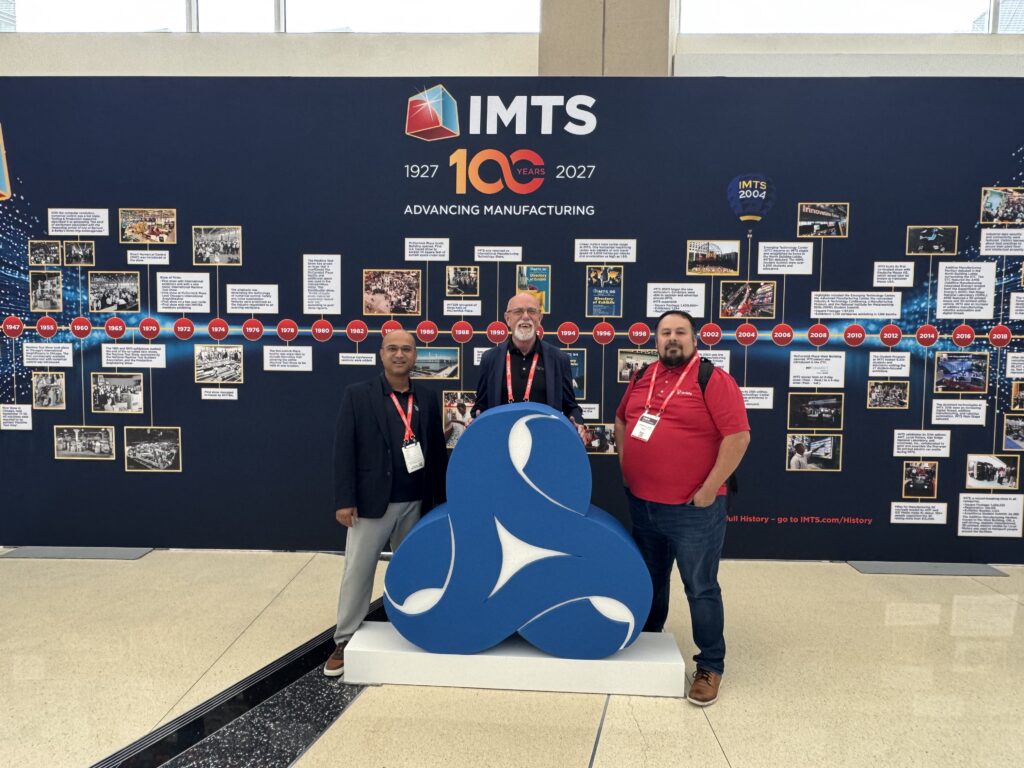
The International Manufacturing Technology Show (IMTS) is one of the world’s major manufacturing technology events and is described by its organizers as the largest manufacturing technology trade show in the Western Hemisphere. The 2026 event took place September 14–19, 2026, at McCormick Place in Chicago, bringing together manufacturers, engineers, technology providers, executives, operations leaders, suppliers, and innovators.
The roots of IMTS stretch back nearly a century. The first National Machine Tool Builders’ Exposition was held in Cleveland in September 1927. That first show occupied approximately 63,000 square feet, attracted more than 12,000 attendees, and featured 428 operating machines. Nearly 100 years later, the scale has changed dramatically, but the basic purpose remains remarkably familiar: bring together the people and technologies that are changing how things are made.
Walking through IMTS today, you can see that evolution firsthand. Machining is still a major part of the show, but it’s now surrounded by automation, robotics, additive manufacturing, software, digital manufacturing solutions, quality systems, connected equipment, data, and emerging technologies.
[ ALBERT WOOD]
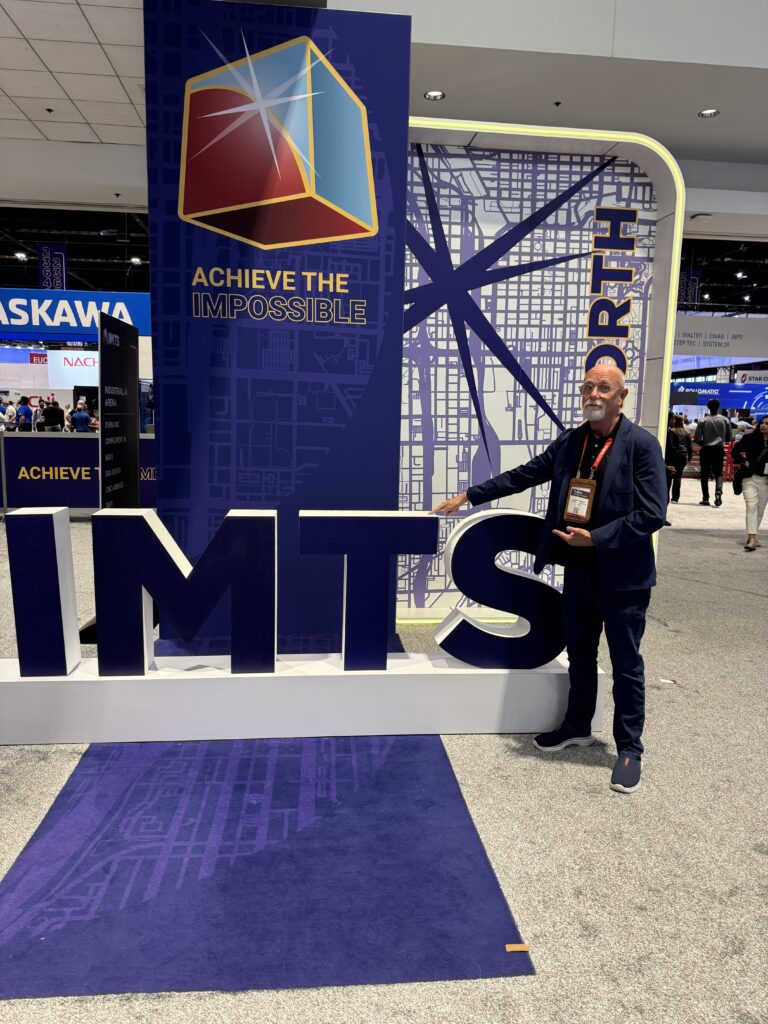
“When coming to IMTS, you definitely want to bring comfy shoes… and your A game!”
Why Did ioVista Go To IMTS 2026?
Let’s be transparent: we went to generate business.
We wanted to meet manufacturers, create relationships, talk with potential clients, reconnect with partners, and identify opportunities where ioVista could help.
But you can’t effectively sell to an industry you aren’t willing to understand.
That’s why one of our biggest objectives at IMTS 2026 was simply to listen.
- What are manufacturers investing in?
- Where are they struggling?
- What technologies are becoming important?
- What are customers and distributors asking for?
- Where are companies experiencing friction between their manufacturing operations and their digital systems?
And perhaps the biggest question: Does the digital side of the organization reflect the sophistication happening on the manufacturing floor?
A manufacturer may invest millions of dollars in new equipment, automation, robotics, software, and operational improvements while still asking customers to navigate an outdated website, email someone for a quote, download a PDF catalog, call for product availability, or wait for a salesperson to provide information that could have been available online.
That’s a disconnect.
And it’s exactly the type of problem we wanted to better understand at IMTS.
The Cost of Not Wanting to Change
One of our biggest takeaways from IMTS 2026 had less to do with a particular machine or technology.
It was about change itself.
Manufacturing has always evolved. What feels different now is the speed.
Automation is improving. AI is entering workflows. Customers expect better digital experiences. Buyers are doing more research before speaking with sales representatives. Internal systems are becoming more connected. Data is increasingly expected to move between systems rather than remain isolated.
That creates an uncomfortable reality for some organizations: What worked for the last 10 or 20 years may not be what carries the business through the next 10.
This doesn’t mean every manufacturer needs to chase every new technology.
Quite the opposite.
Digital transformation should solve business problems, not create technology for technology’s sake.
But refusing to modernize because “we’ve always done it this way” creates its own risks.
Legacy websites become harder to maintain. Systems stop communicating effectively. Employees create manual workarounds. Customer information becomes fragmented. Sales teams spend time completing tasks that could be automated. Product information becomes difficult to manage. And competitors with better digital experiences can become easier to do business with.
The question isn’t: “Do we need the newest technology?”
The better question is: “Where is outdated technology creating unnecessary friction in our business?”
That’s where meaningful digital transformation begins.

The Leaders Change Often and Quickly
Another lesson from IMTS 2026 was just how quickly leadership positions can change when technology changes.
A company can lead an industry for decades, but history alone doesn’t guarantee its position tomorrow.
- New technologies create new competitors.
- New buying behaviors create new expectations.
- New platforms create new distribution models.
And AI is introducing another significant change: how customers discover companies and products in the first place.
For years, manufacturers thought primarily about Google when discussing digital visibility. Today, businesses also have to think about how their information is understood and surfaced through AI-driven search and discovery experiences.
That doesn’t mean traditional SEO suddenly disappears. It means the digital discovery ecosystem is getting larger.
The manufacturers that navigate this transition successfully will likely be the ones willing to continually evaluate how customers discover them, research their products, request information, purchase, reorder, communicate with sales teams, and receive support.
[ MIKE PATEL]
“If you don’t change, your situation will change without you, and YOU get left behind.”

Your Machines May Be Modern… Is Your Digital Infrastructure?
This became one of the most interesting questions for us during IMTS 2026.
Walk onto the show floor, and you see incredible engineering.
Then visit some manufacturing websites and the experience can feel like you’ve traveled backward in time.
That gap represents an opportunity.
Imagine a manufacturer where the website isn’t simply an online brochure.
Instead, customers can:
- Search complex product catalogs quickly.
- Access technical specifications and documentation.
- See products relevant to their account.
- Request quotes digitally.
- Reorder previously purchased products.
- Upload SKUs and quantities for bulk orders.
- Access customer-specific pricing.
- View inventory or availability.
- Manage invoices and order history.
- Communicate with sales representatives.
- Receive personalized content.
- Interact with AI-powered tools.
- Move seamlessly between the website, CRM, ERP, PIM, marketing platform, and other business systems.
Now the website isn’t just a website.
It becomes part of the manufacturer’s infrastructure.
That’s the conversation we’re interested in having.
Who is ioVista?
ioVista is a Dallas-based digital commerce agency with more than 20 years of experience helping organizations build, improve, and grow their digital operations. The company works across eCommerce strategy, design, development, integrations, support, digital marketing, SEO, conversion optimization, and related digital initiatives.
For manufacturers, that can mean much more than simply building a new website.
It can mean helping connect the different parts of the business into a more cohesive digital ecosystem.
That could involve eCommerce, B2B commerce, ERP integrations, CRM integrations, PIM systems, customer portals, product catalogs, platform migrations, marketing automation, analytics, SEO, AI search visibility, and other technologies.
ioVista also works with major commerce platforms, including Adobe Commerce/Magento, Shopify, BigCommerce, WooCommerce, and Shopware.
Our objective isn’t technology for technology’s sake.
It’s figuring out where technology can remove friction, improve the customer experience, help sales teams, simplify operations, and create opportunities for growth.
IMTS 2026 Wasn’t Just About Machines
That’s probably my biggest takeaway from five days in Chicago.
Yes, we saw machines.
A lot of machines.
Seriously, a lot of machines.
But underneath all of it was something much bigger.
We saw an industry transforming.
We saw manufacturers thinking about automation, efficiency, workforce challenges, data, software, AI, customer expectations, and what their businesses need to look like over the next several years.
And we came home with an even stronger conviction: The innovation happening on the manufacturing floor shouldn’t stop when you reach the company’s website.
- Your equipment can evolve.
- Your processes can evolve.
- Your products can evolve.
- Your digital infrastructure can evolve with them.
So after five days, countless conversations, a lot of walking, and probably more coffee than we should admit to drinking, we’re leaving IMTS with one question for manufacturers: What’s the most technologically outdated part of your business, and what’s it costing you?
Let’s Continue to Conversation
If you met the ioVista team at IMTS 2026, we’d love to continue the conversation.
And if we didn’t get a chance to meet, we’d still like to hear from you.
Tell us what your organization is trying to accomplish, where your current technology is creating friction, and what you want your digital infrastructure to be able to do.
We can start there.
IMTS 2026 Gallery
Aaron Pallares


Aaron Pallares leads Customer Success and Strategic Partnerships at ioVista, helping businesses transform their eCommerce initiatives into sustainable growth. He collaborates with merchants, technology partners, and cross-functional teams to optimize digital commerce strategies, improve customer adoption, and build high-performing partner ecosystems. His expertise includes customer success, platform optimization, partner enablement, and scalable growth strategies for modern B2B and B2C commerce.
Popular Posts
-
 News
NewsInternational Manufacturing Technology Show: What Manufacturing Taught Us About Technology, Change and the Future
Aaron Pallares
29 Sep 2026 -
B2B, BigCommerce
BigCommerce B2B Edition Explained: Features, Pricing and Fit

Mike Patel
21 Sep 2026 -
BigCommerce, Migration, Shopify
BigCommerce vs. Shopify for B2B: A 2026 Decision Guide
Mike Patel
18 Sep 2026 -
AI and ML, AIO, B2B, E-Commerce
The Role of AI in Modern eCommerce: A B2B and B2C Guide
Aaron Pallares
16 Sep 2026 -
Shopify
Do You Need a Shopify Agency? A Guide for Growing B2B & D2C Businesses
Aaron Pallares
14 Sep 2026 -
Update
Adobe Commerce APSB26-138: What Businesses Need to Know About the Security Update
Albert Wood
10 Sep 2026 -
Adobe Commerce
Adobe Commerce APSB26-146: Critical Security Fixes Require Urgent Action
Albert Wood
08 Sep 2026 -
Adobe Commerce, SEO
Magento 2 SEO Guide for 2026: Advanced Strategies to Boost Rankings and Performance
Albert Wood
07 Sep 2026 -
-
-
-
Shopify
When Commerce Policies Change: What Regulated Merchants Can Learn from Shopify's Vape Decision
Albert Wood
18 Aug 2026 -
Adobe Commerce
Adobe Commerce APSB26-92: Security Risks, Affected Versions, and Next Steps
Albert Wood
13 Aug 2026 -
-
News
How ShopWare and ioVista are Driving Digital Transformation in the 2A Community!
Aaron Pallares
04 Aug 2026 -
News
Why ioVista Became a Shopware Partner: Building the Future of Digital Commerce Through Innovation and Collaboration
Aaron Pallares
28 Jul 2026 -
Adobe Commerce, Magento, Update
Critical Adobe Commerce Security Update APSB26-73: Key Highlights
Mike Patel
15 Jul 2026 -
AI and ML, Google Updates
Google Marketing Live 2026: Everything You Need to Know about Google's AI Advertising Revolution
Mike Patel
16 Jun 2026 -
Adobe Commerce
Critical Adobe Commerce Security Update APSB26-49: Key Highlights
Mike Patel
15 May 2026 -
Adobe Commerce
Adobe Commerce 2.4.9 is Here: Features, Security, and Platform Enhancements
Mike Patel
15 May 2026 -
-
-
-
AI and ML, AIO, B2B
Machine-Readable B2B: The Hidden Layer that Wins AI Visibility
Mike Patel
14 Apr 2026 -
B2B
AI-Ready Catalogs: Turning Your Product Data into a Recommendation Engine
Mike Patel
09 Apr 2026 -
-
-
AIO, SEO
LLM Optimization: How Large Language Models Discover, Rank, and Cite Content
Mike Patel
26 Mar 2026 -
Migration, SEO
SEO Website Migration Checklist: Guide to Protect Your Rankings & Traffic in 2026
Mike Patel
13 Mar 2026 -
Adobe Commerce, Update
Adobe Commerce Security Update APSB26-05: Everything You Need to Know
Mike Patel
12 Mar 2026 -
AIO, SEO
LLM SEO vs GEO vs SEO: What Actually Matters for eCommerce Brands in 2026
Mike Patel
12 Mar 2026 -
Adobe Commerce
Are You Still on Adobe Commerce 2.4.6? Now is the Time to Upgrade
Mike Patel
24 Feb 2026 -
-
-
-
-
AI and ML, SEO
AI-SEO Is Changing Everything in 2026: 5 Strategies to Rank and Stay Relevant
Mike Patel
10 Dec 2025 -
-
E-Commerce
What SEMA 2025 Revealed: The Digital Transformation Race in the Automotive Aftermarket Industry
Mike Patel
20 Nov 2025 -
Adobe Commerce
Most Exciting Update: Hyvä Theme is Now Open Source and FREE
Paren Sutreja
17 Nov 2025 -
News, Shopify
Breakthrough Update: Managing Product Variants on Shopify Got Easier with 2048 Variants
Mike Patel
11 Nov 2025 -
Adobe Commerce, Update
Critical Adobe Commerce Vulnerability (CVE-2025-54236): What Merchants Need to Know
Mike Patel
27 Oct 2025 -
Adobe Commerce, Update
Adobe Commerce Security Update APSB25-94: What You Need to Know
Mike Patel
15 Oct 2025 -
Shopify
The Quiet Revolution: Why the Shopify x ChatGPT Partnership Changes Everything in eCommerce
Mike Patel
03 Oct 2025 -
Adobe Commerce
Adobe Sensei AI in eCommerce 2025: Transforming Digital Commerce
Mike Patel
19 Sep 2025 -
Adobe Commerce
Critical Adobe Commerce Security Update APSB25-88: Key Highlights
Mike Patel
10 Sep 2025 -
Shopify
Shopify API Deprecations and New Features: A Merchant's Guide to Upcoming Changes
Mike Patel
08 Sep 2025 -
AI and ML
Agentic AI for Business - Drive Success with Intelligent Automation
Mike Patel
27 Aug 2025 -
Adobe Commerce, Update
Adobe Commerce Security Update APSB25-71: Essential Security Fixes You Need to Know
Mike Patel
13 Aug 2025 -
News, Shopify
Shopify Summer Edition 2025: A Technical Insight into the Latest Update
Mike Patel
08 Aug 2025 -
-
Adobe Commerce, Magento
Adobe Commerce Security Update APSB25-50: Key Highlights
Mike Patel
11 Jun 2025 -
Adobe Commerce, B2B, E-Commerce
B2B Excellence Starts with Adobe Commerce (Magento) - Not WooCommerce
Mike Patel
03 Jun 2025 -
AI and ML, B2B, Digital Marketing, E-Commerce, Web Development
AI and ML in B2B: A Vision for the Future of Commerce by 2025
Mike Patel
27 May 2025 -
B2B, Digital Marketing, E-Commerce, Web Development
20 Next-Gen B2B eCommerce Features that will Dominate in 2025
Mike Patel
20 May 2025 -
B2B, BigCommerce, E-Commerce, Web Development
WooCommerce to BigCommerce Migration Fuels Your B2B eCommerce Growth
Mike Patel
06 May 2025 -
Adobe Commerce, E-Commerce, Migration, News, Web Development
Adobe Commerce SaaS: How Will It Empower Your eCommerce Business?
Mike Patel
22 Apr 2025 -
B2B, E-Commerce, Web Development
Leverage ERP Integration to Scale Your B2B eCommerce Business in 2025
Mike Patel
15 Apr 2025 -
Adobe Commerce, E-Commerce, Magento, News, Web Development
Adobe Commerce Security Update APSB25-26: All You Need to Know
Mike Patel
10 Apr 2025 -
Adobe Commerce, E-Commerce, Magento, News, Web Development
Adobe Commerce 2.4.8 Release: Key Highlights
Mike Patel
10 Apr 2025 -
B2B, E-Commerce, Migration, Web Development
Why Scaling Business Should Migrate WooCommerce Stores to Shopify
Mike Patel
08 Apr 2025 -
Adobe Commerce, B2B, E-Commerce, Magento, Web Development
Why Does Adobe Commerce (Magento) Lead the Way of B2B eCommerce
Mike Patel
18 Mar 2025 -
B2B, Digital Marketing, E-Commerce, Web Development
Gain a Competitive Edge by Turning Obstacles into Opportunities: B2B Digital Transformation in 2025
Mike Patel
11 Mar 2025 -
AI and ML, B2B, Digital Marketing, E-Commerce, Web Development
10 Key Drivers of Digital Transformation in B2B eCommerce for 2025
Mike Patel
04 Mar 2025 -
B2B, E-Commerce, Web Development
5 Leading eCommerce Platforms to Build Scalable B2B Customer Portals
Mike Patel
25 Feb 2025 -
Google Updates, News, SEO
Google Search Ranking Volatility: All You Need to Know
Mike Patel
18 Feb 2025 -
Adobe Commerce, E-Commerce, Magento, News, Web Development
Adobe Commerce Security Update APSB25-08: All You Need to Know
Mike Patel
13 Feb 2025 -
B2B, E-Commerce, Web Development
7 Strategic Benefits of an Online B2B Customer Portal
Mike Patel
11 Feb 2025 -
B2B, E-Commerce, Web Development
What Makes a Great Online B2B Customer Portal? Top 10 Features to Know
Mike Patel
04 Feb 2025 -
B2B, E-Commerce, Web Development
Legacy B2B eCommerce Systems Slowing You Down? It's Time for Modernization
Mike Patel
28 Jan 2025 -
B2B, E-Commerce, Manufacturing, Migration, Web Development
80% of B2B Businesses Are Holding You Back by Legacy eCommerce Systems. Is Yours One of Them?
Mike Patel
15 Jan 2025 -
B2B, E-Commerce, Manufacturing, Web Development
Essential B2B Commerce Features for 2024
Mike Patel
20 Nov 2024 -
Adobe Commerce, E-Commerce, Magento, News, Web Development
Security Update Available for Adobe Commerce | APSB24-90
Albert Wood
20 Nov 2024 -
Adobe Commerce, E-Commerce, Magento, News
Why Choose Hyvä Enterprise for Your Adobe Commerce Store?
Paren Sutreja
19 Nov 2024 -
Adobe Commerce, E-Commerce, Magento, News
Security Update APSB24-73 for Adobe Commerce: Everything You Need to Know
Albert Wood
14 Oct 2024 -
Adobe Commerce, E-Commerce, Magento, News, Web Development
CosmicSting Exploit Still Poses a Threat
Albert Wood
25 Jul 2024 -
Adobe Commerce, E-Commerce, Magento, News
CosmicSting: Unauthorized XXE Vulnerability
Albert Wood
17 Jul 2024 -
Adobe Commerce, E-Commerce, Magento, News
Hyvä Theme for Magento 2: Uncover Powerful Features – Evaluate Pros and Cons
Paren Sutreja
16 Jul 2024 -
Adobe Commerce, Magento, News, Web Development
Magento 2.4.7: Explore the Newest Enhancements and Features
Albert Wood
30 Apr 2024 -
Adobe Commerce, Magento, News, Web Development
Magento 2.4.6-p5: Enhancing Stability and Security
Mike Patel
22 Apr 2024 -
-
Digital Marketing, E-Commerce, SEO
The Impact of Site Speed on eCommerce SEO Performance
Mike Patel
14 Feb 2024 -
Awards & Recognition, B2B, BigCommerce, E-Commerce, Manufacturing, Web Development
ioVista Attains B2B Specialization on BigCommerce
Albert Wood
30 Oct 2023 -
Adobe Commerce, BigCommerce, Digital Marketing, E-Commerce, Magento, SEO
5 Ways to Boost eCommerce Sales in 2024
Mike Patel
21 Sep 2023 -
Adobe Commerce, Awards & Recognition, B2B, E-Commerce, Magento, Manufacturing, Web Development
It’s Official: ioVista Has Become a Recognized Adobe Specialized Partner
Albert Wood
05 Sep 2023 -
Adobe Commerce, E-Commerce, Magento, News, Web Development
Magento 2.4.7-beta1 Release
Mike Patel
15 Aug 2023 -
-
Awards & Recognition, B2B, E-Commerce, Manufacturing, Web Development
ioVista Announced as a 2023 Local Excellence Award Winner by UpCity
Albert Wood
09 May 2023 -
Digital Marketing, E-Commerce, News
Google Analytics 4: What You Need To Know
Albert Wood
29 Mar 2023 -
Adobe Commerce, E-Commerce, Magento, News, Web Development
Adobe Commerce 2.4.6 Release
Mike Patel
13 Mar 2023 -
Adobe Commerce, E-Commerce, Magento, Web Development
Questions You Should Ask Your Magento Agency
Albert Wood
17 Feb 2023 -
B2B, Digital Marketing, E-Commerce, Manufacturing, Web Development
7 Proven Strategies to Increase B2B/Wholesale eCommerce Revenue
Mike Patel
01 Feb 2023 -
Digital Marketing, E-Commerce
10 eCommerce Trends to Increase your Sales in 2023
Albert Wood
12 Jan 2023 -
B2B, E-Commerce, Manufacturing, Web Development
B2B eCommerce Features Your Store Need in 2023
Albert Wood
05 Jan 2023 -
Adobe Commerce, E-Commerce, Magento, News, Web Development
Adobe/Magento Highlights 2022 - Is your store Up-to-Date
Mike Patel
20 Dec 2022 -
BigCommerce, E-Commerce, News, Web Development
BigCommerce Releases StagingPro for Enterprise Merchants and Agency Developers
Albert Wood
15 Dec 2022 -
Adobe Commerce, E-Commerce, Magento, News, Web Development
Adobe discontinues Support for the 2.4.0-2.4.3 Release Line
Mike Patel
09 Dec 2022 -
-
Digital Marketing, E-Commerce, News
Universal Analytics Going Away: What Does it Mean, What you need to Do?
Albert Wood
24 Nov 2022 -
Adobe Commerce, E-Commerce, Magento, News
40% of Magento and Adobe Commerce Websites at Risk in November 2022
Albert Wood
17 Nov 2022

























Let’s work together to create outstanding digital experiences.
With 20+ years of industry experience, ioVista understands your eCommerce needs and delivers best-in-class solutions that help you gain a competitive edge.
or Call us at: +1 214-699-4391

TOP
Get in Touch