


20 Next-Gen B2B eCommerce Features that will Dominate in 2025
20 May 2025
 Mike Patel

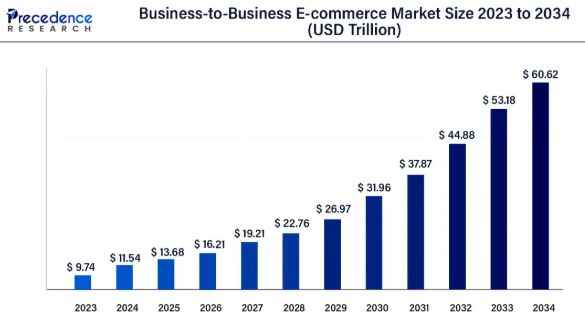
The B2B eCommerce market is experiencing rapid growth. A survey shows it is projected to reach $60.62 trillion by 2034.
As the B2B eCommerce market expands, customer expectations rise too. Here are Gartner’s key findings that indicate the change in B2B customers’ buying behavior.
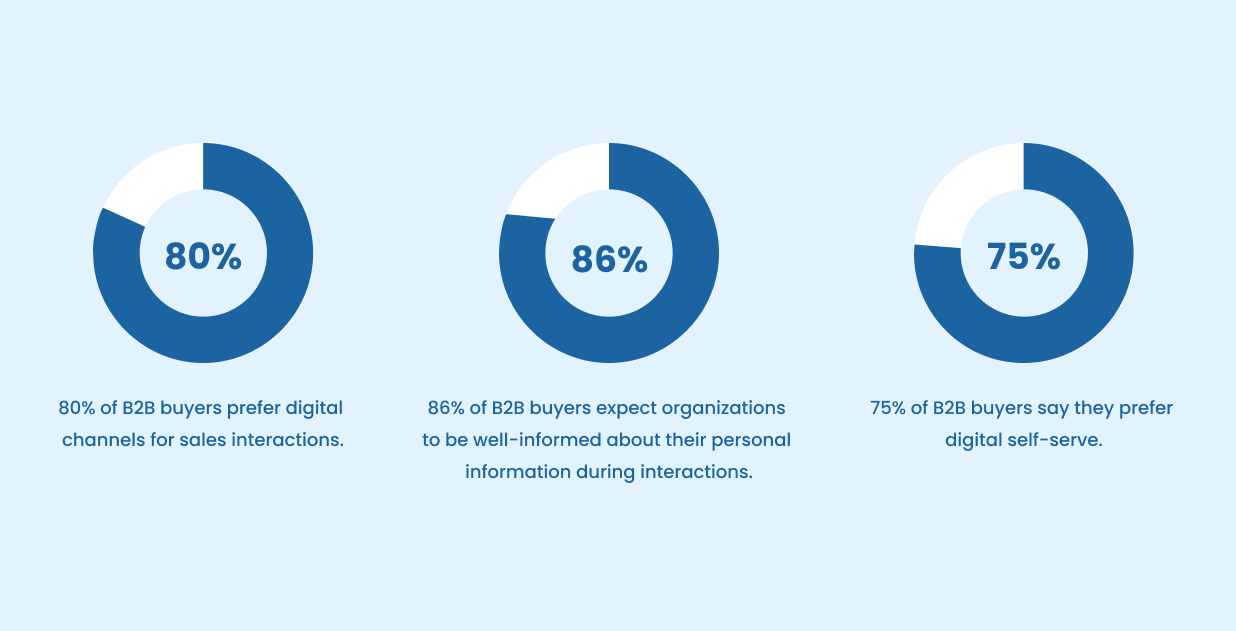
As the B2B eCommerce market expands, customer expectations rise too. Here are Gartner’s key findings that indicate the change in B2B customers’ buying behavior.
- 80% of B2B buyers prefer digital channels for sales interactions.
- 86% of B2B buyers expect organizations to be well-informed about their personal information during interactions.
- 75% of B2B buyers say they prefer digital self-serve.
These are just a few. The list of expectations is long.
Is your existing eCommerce solution capable of meeting these expectations?
If not, you need a digital platform with futuristic B2B eCommerce features. Enable your B2B buyers with a faster, streamlined, and engaging buying journey that improves customer engagement and conversions.
Ready to explore essential B2B eCommerce features?
Let’s get started!
Top 20 B2B eCommerce Features that Help You Gain a Competitive Edge
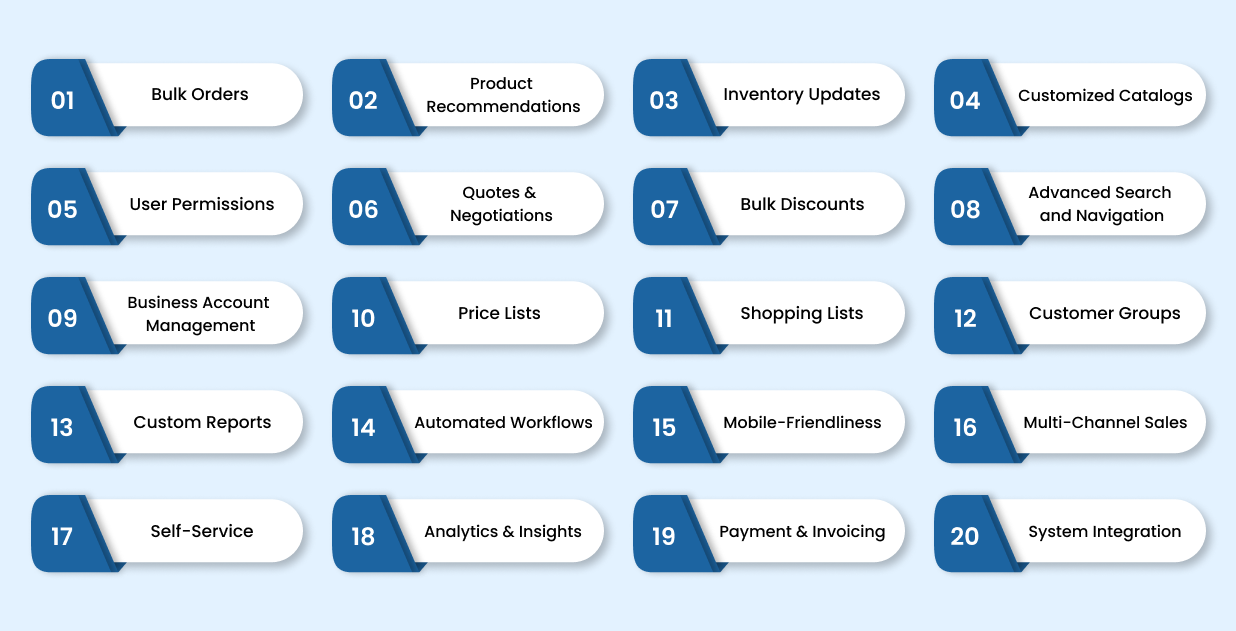
By developing and integrating advanced eCommerce features, B2B organizations can optimize their tedious and time-consuming processes with dynamic ones. Build B2B eCommerce solutions with the following features to deliver intuitive customer experiences.
1. Bulk Orders
B2B businesses often place large orders. Searching for each product manually from the online catalog takes too much time and effort.
Instead, provide your buyers with a bulk ordering form, where they need to fill in
- Product Details (SKUs or part numbers)
- Quantity
Once the customers submit the form, they should be redirected to the checkout page for order confirmation and payment.
2. Product Recommendations
One of the most essential B2B eCommerce features that helps you increase your sales.
With each passing day, the B2B market becomes more competitive. Thus, brands struggle to attract a large customer base and increase revenue. Tech-savvy buyers expect personalized product recommendations and content experiences.
Opt for a B2B eCommerce platform with AI-based product recommendation algorithms. It analyzes customer behavior and suggests the most relevant products that drive sales opportunities.
3. Inventory Updates
Ensuring product availability is crucial in the B2B industry. Inventory tracking and management are essential to avoid overstocking and understocking situations. It allows you to share updated inventory information with clients.
The client feels frustrated if they realize the product is out of stock during checkout. Instead, show them the product availability status while they explore the catalogs. It helps them focus on ordering available products.
If your eCommerce solution does not contain a real-time inventory update feature, it may hamper your sales, brand reputation, and customer trust.
Real-time inventory updates ensure smooth supply chain operations, too.
Furthermore, access to accurate inventory levels is essential for businesses with a just-in-time strategy.
4. Customized Catalogs
B2B companies have a wide range of products to sell, and B2B buyers need to shop for a large volume of multiple products. Thus, the product discovery process becomes complicated.
To simplify product search, you can integrate the catalog management feature.
Modern B2B eCommerce platforms contain advanced catalog management features. It allows you to
- Upload and configure relevant products
- Create personalized catalogs (based on the client’s purchase history and preferences)
- Share tailored catalogs with the respective corporate buyers
- Distribute catalogs on different online channels, including websites, digital stores, social media, etc.
Cutting-edge eCommerce platforms manage all product data in a single platform and generate tailored catalogs with accurate attributes, variables, and restrictions for different B2B eCommerce website solutions.
5. User Permissions
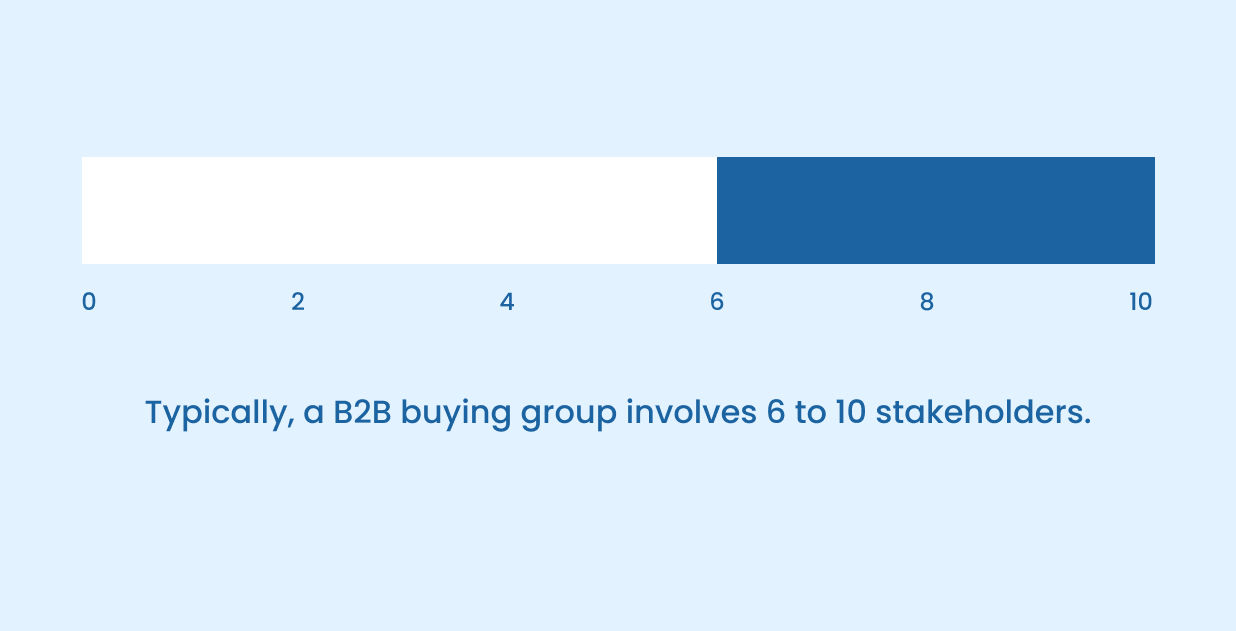
Typically, a B2B buying group involves 6 to 10 stakeholders.
Involvement of multiple decision makers results in a complex and lengthy B2B buying process.
To simplify the purchase, facilitate each stakeholder with separate login rights to the B2B eCommerce solution. Provide the data access permissions based on their role and responsibility.
Manage all the user accounts from the admin console of B2B eCommerce solutions. It allows you to define account hierarchy based on roles and responsibilities for sub-accounts.
User permission is one of the essential B2B eCommerce features that
- Ensure data security by limiting data access
- Provide a holistic view of the buying accounts
- Allow access to different contacts for the B2B buyers
Value-added offerings of the feature are
- B2B specific pricing and purchasing options
- Review order history
- Share resources such as requisition lists
6. Quotes and Negotiations
Allow your buyers to send a Request for Quote (RFQ) using an online quoting system to streamline the process and reduce the back-and-forth. Once your sales team receives quotes, they can review the quotation and negotiate the price by considering the best possible discounts for the final pricing.
Enhance the customer experience by establishing an effective quotation and negotiation process.
7. Bulk Discounts
Most B2B purchases are in bulk. You cannot pack every single product separately. You need to deliver the products in packs, cartons, pallets, cases, etc. While packing the large orders, check for the discounts you can offer.
Considering advanced B2B eCommerce platforms, you can define customized discounts and pricing for each customer and customer group. Based on the order quantity, you can offer bulk discounts that help you increase your customer base and profitability.
8. Search and Navigation

B2B businesses have complicated product catalogs. It is difficult for your sales team to navigate customers through all the products.
Leverage the built-in search and navigation capabilities of B2B eCommerce platforms and let your customers reach their preferred products effortlessly.
Modern functionalities that you can consider for product search are
- Voice Search
- Text Search
- Hit Highlighting
- Faceted Navigation
- Biasing Rules
Drive up-sell and cross-sell opportunities by offering personalized search results based on inventory level and customer preferences.
9. Business Account Management
As we have already discussed, multiple stakeholders are involved in decision-making while you work with other businesses. To manage all the users under a single corporate account is critical for an effective buying process.
Go for a digital platform that facilitates you with robust B2B eCommerce features like corporate account management. Manage different buyers of the same organization under one business account and help them make purchase decisions faster.
Attract large-scale organizations with multiple stakeholders by facilitating them with
- Managing multiple buyers of an organization with different buying capabilities and requirements
- Sharing shopping carts
- Role and permission-based self-service
- Streamlined approval workflow
- Product list updates
- Access to support
- Self-managed roles and permissions (flexibility to add or remove users)
- Placing orders in a customer account by your sales team
10. Price Lists
In the B2B domain, pricing is complex as it is calculated dynamically based on the specific pricing and business rules. Moreover, the pricing depends on various factors, such as
- Purchase volume
- Frequency of purchase
- Pre-negotiated discounts, and more
Using the pricing lists feature, you create and customize pricing for each company, customer, and business unit that purchases products from you. The price lists become more complicated due to
- Different currencies
- Various tiers
- An unlimited number of price lists, and more
Ensure the defined pricing is synced with your ERP system to improve data accuracy across the systems and simplify the pricing-related operations.
11. Shopping Lists
Shopping lists are a “wish list” for B2B customers.
By integrating this feature into a B2B eCommerce solution, you can allow buyers to create and save a list of products they buy frequently. They can place an order for individual products or the entire list. Reduce the ordering time for corporate buyers by simplifying repurchasing.
12. Customer Groups
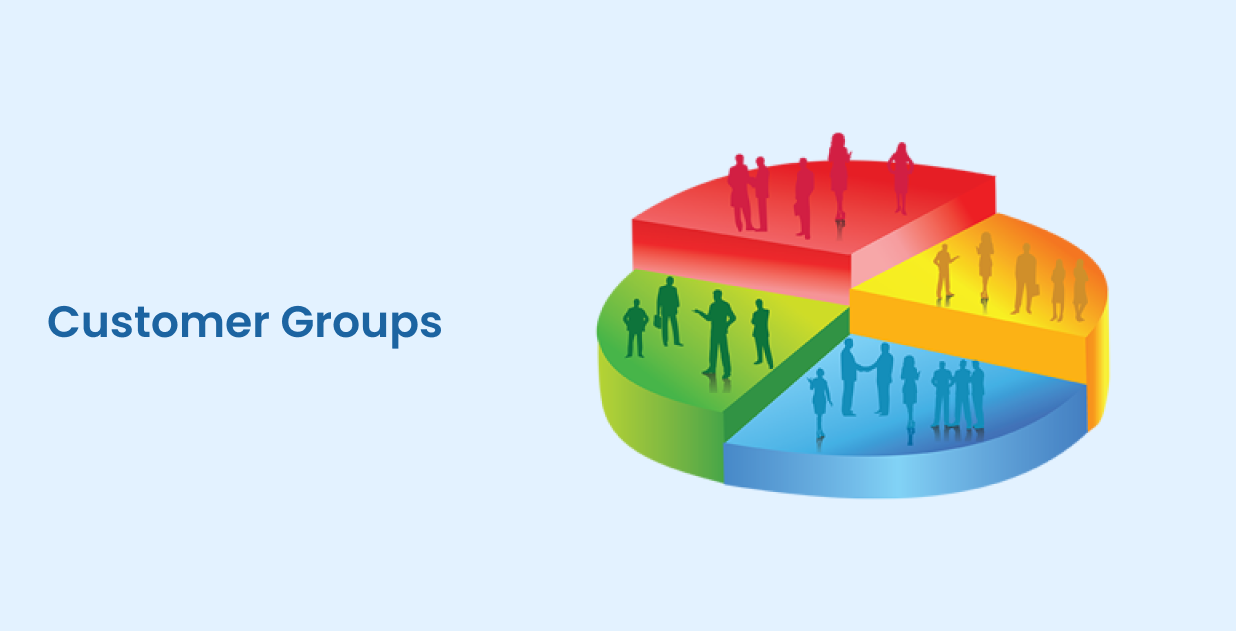
Most B2B merchants receive inquiries for large orders. They define the customer group and segmentation based on the products and quantity ordered. By classifying the customer groups, B2B companies can define
- Minimum order requirements
- Customer-centric content
- Pricing
While defining a customer segment, you need to consider different aspects, including
- Order volume
- Reorder frequency
- Quantity of product orders
- Catalog selection
- Geographical location, and more
Create a tailored shopping cart experience based on customer segmentation and profile. Improve conversions by providing personalized content, pricing, payment, and delivery options to the right customer profiles.
13. Custom Reports
B2B merchants use analytics to understand customers’ buying behavior and improve their inventory management, supply chain, and delivery operations. Custom reporting is an integral part of eCommerce analytics.
Custom reports provide the marketing team with exclusive insights about customers. Analyze the buyers’ purchase patterns and run the marketing and sales campaigns accordingly. The data-driven sales and marketing approach helps you gain better results.
14. Automated Workflows
Automation is taking over the world, and B2B eCommerce is no exception. B2B workflows are complex. The merchants need to streamline and automate them for faster business operations. The popular examples of B2B companies using automated workflow are
- AI-powered customer support/service
- Real-time inventory updates
- Marketing automation
- Price personalization
- Payment processing
- Fraud detection
- Price lock for mid-deal negotiation, and more
15. Mobile Friendliness
Look at the key findings of BCG regarding the mobile usage across B2B buyers.
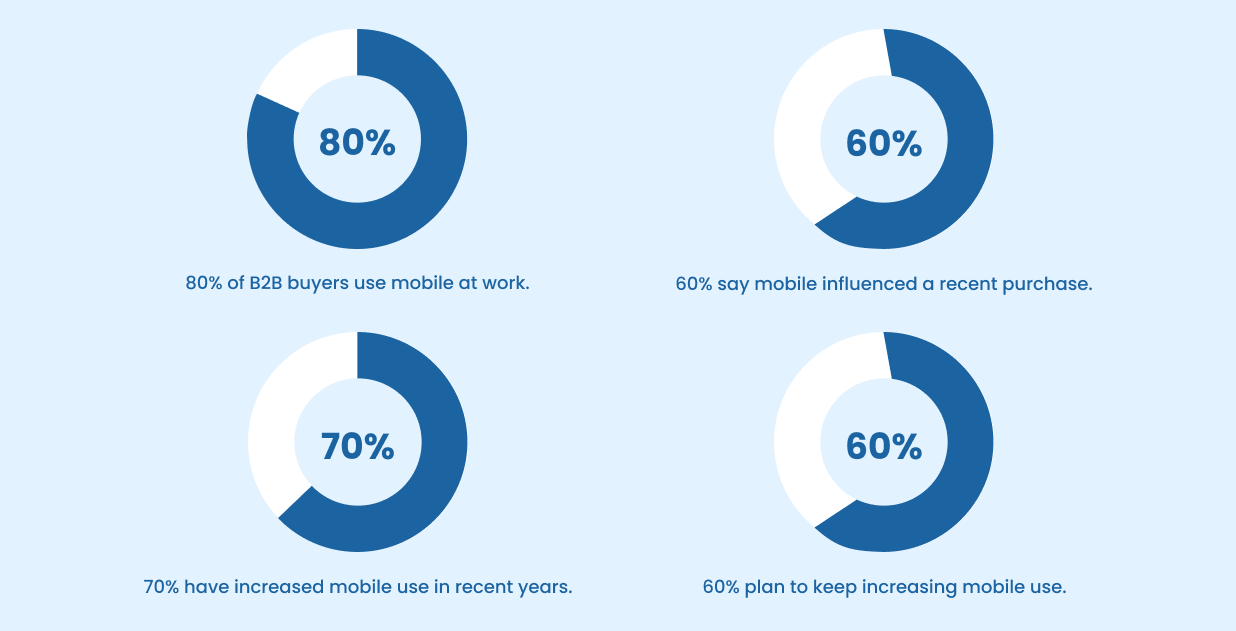
- 80% of B2B buyers use their mobiles at work.
- More than 60% of B2B buyers said mobile played a significant role in their recent purchase.
- 70% of B2B buyers have increased mobile usage significantly over the past few years.
- 60% of B2B buyers expect to continue to increase their mobile usage.
These numbers indicate an increasing use of mobile commerce among B2B customers.
Ensure your B2B eCommerce solutions work seamlessly on mobile.
- If you have an eCommerce website/portal, it must be responsive.
- If you have a mobile app, let your target audience complete the buying process, from product search to order tracking, using their mobile devices.
With advanced eCommerce platforms, you can leverage solutions like
- Progressive Web App
- Mobile App
- Responsive Web Design
- Headless commerce or composable commerce
16. Multi-Channel Sales
Unlike B2C customers, B2B buyers have also started buying the products from different digital channels such as marketplaces, social media, websites, eCommerce portals, and more. Select a B2B eCommerce platform that allows you to sell your products across all the popular channels.
The B2B eCommerce features, like multi-channel sales, ensure
- Centralized management of customers, orders, and inventory data to share unified information across different digital channels.
- Products are listed on marketplaces like Alibaba, Amazon Business, etc.
- Integration with social selling platforms
Expand your presence across all digital channels and meet your buyers where they prefer to purchase. Promote your products and business on various online platforms to increase brand awareness and customer engagement.
17. Self-Service
With the emergence of digital space, B2B buyers also want an online shopping experience, unlike B2C buyers. Self-service is one of the popular B2B eCommerce features that play a key role in buyers’ decision-making and attaining business objectives.
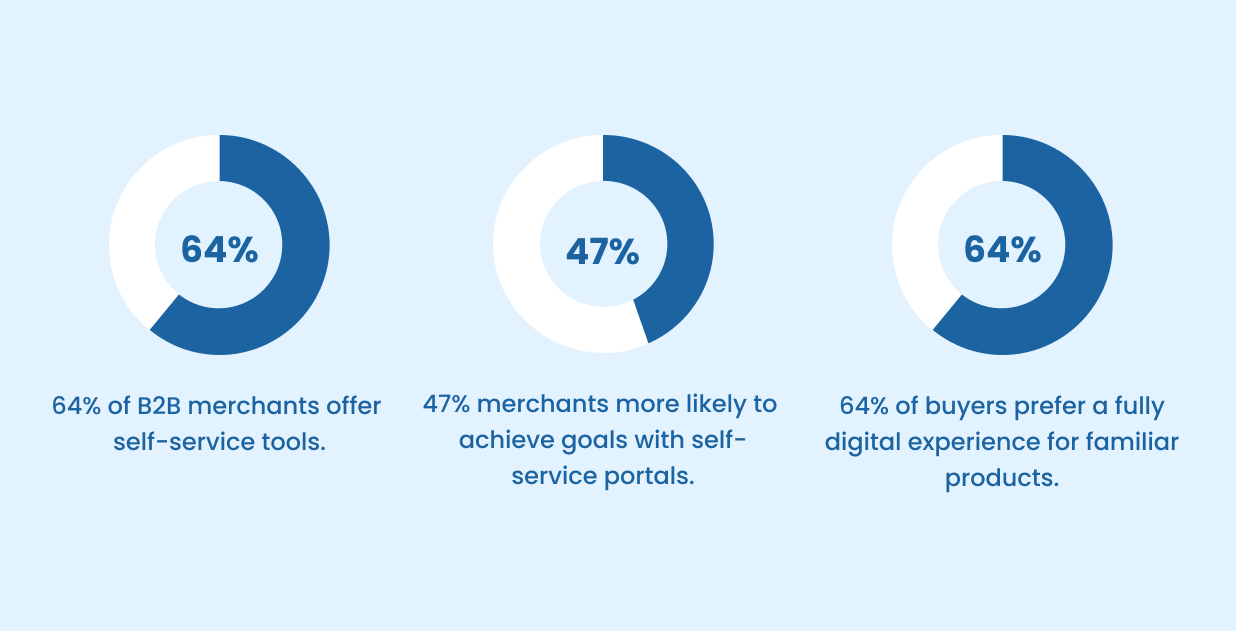
- 64% of B2B merchants offer self-service tools to buyers to make purchase decisions.
- B2B merchants that offer self-service portals to the corporate buyers are 47% more likely to attain their business goals than those who don’t.
- If buyers are familiar with the products, 64% would prefer a 100% digital shopping experience.
Self-service portal significantly impacts customers’ buying decisions.
Ensure the portal has a user-friendly interface so buyers can navigate the solution and place orders without contacting sales reps. The portal should facilitate the B2B buyers with
- Order fulfillment tracking
- Advanced search
- Order management
- Customized pricing and quotes
- Shopping list management
- Ability to change the personal details (such as address, role, profile, etc.)
18. Analytics & insights
While choosing a platform, ensure it contains analytical capabilities and provides exclusive insights about the various business aspects that impact your strategic growth. Advanced analytics provide B2B merchants with exclusive insights into
- Corporate account management
- Order tracking
- Customers’ buying behavior and patterns
- Critical business KPIs
- Custom reports & dashboards, and more
19. Payment & Invoicing

In the B2B industry, monetary transactions are complicated as payment depends on predefined terms and conditions. Moreover, there is no standard price for all corporate customers. It varies from customer to customer.
To make a payment, companies can opt for a suitable way from the different options, which involves
- Pay on delivery via wire transfer
- Purchase on approved credit
- Buy with NET 30 payment terms
You can make a payment through traditional ways such as credit cards, checks, bank transfers, electronic fund transfers, etc. However, with modern B2B eCommerce platforms, you can have access to more advanced payment options, such as
- ACH
- Partial payment
- Credit lines, and more
Once the payment is done, you can transfer that information to other systems to optimize the operations. Thus, along with payment gateways and processor integration, ensure synchronizing orders and payments to financial and accounting systems.
20. System Integration
Integration capabilities are crucial in a B2B eCommerce business to streamline, optimize, and automate various operations. Select a platform that allows you to add enterprise systems and all third-party apps/software.
Cross-system integration ensures access to updated and accurate data across all systems. Correct data provides critical insights that help you refine your business strategies and gain a competitive edge.
The eCommerce platform should allow you to integrate systems like
- Enterprise Resource Planning (ERP)
- Customer Relationship Management (CRM)
- Product Information Management (PIM)
- Inventory Management System
- Supply Chain Management System, and more
Strengthen Your Online Store with Strategic B2B eCommerce Features Integration
If you are building a new B2B eCommerce solution or portal, or want to optimize an existing one, these features are essential to integrate to attain optimum results. Enhance customer experience by facilitating B2B buyers with intuitive buying journeys.
ioVista, a leading B2B digital transformation provider, helps B2B brands build feature-rich eCommerce stores that appeal to B2B customers and drive better sales opportunities. Leverage our proven expertise in developing and implementing custom features to meet your business-specific B2B eCommerce needs.
Are you ready to pave the path to B2B eCommerce success with ioVista? Connect with our certified experts to start your journey towards immense growth and expansion.
Frequently Asked Questions
Which e-payment mechanism is widely used in B2B eCommerce businesses?
In the B2B eCommerce domain, several payment options are available for the buyers. The most popular e-payment mechanisms are credit cards, debit cards, purchase orders, electronic funds transfers, wire transfers, and more.
In the United States, ACH payments are considered an efficient and cost-effective payment mechanism.
What is account management in a B2B eCommerce solution?
By integrating the corporate account management feature in B2B eCommerce solutions, B2B brands can nurture, maintain, and strengthen relationships with corporate buyers. Allocate dedicated account management to your business account to deliver a better experience. It helps you understand your client’s needs, identify opportunities, and provide personalized support.
What are the benefits of CRM and ERP integration in a B2B eCommerce site?
Integration of CRM and ERP systems in your B2B eCommerce website solution improves customer experience, enhances efficiency, and provides better visibility of your business operations. Moreover, you can make faster decisions, achieve accurate inventory management, and streamline order management, as the integration offers a unified view of business processes and customer data.
Mike Patel


Mike Patel is the Founder and CEO of ioVista, a leading digital commerce agency specializing in eCommerce solutions. With a strong background in business and technology, Mike Patel has been at the forefront of driving digital transformations for businesses. He has successfully navigated the ever-changing landscape of eCommerce, helping companies leverage the power of online platforms to grow their brand, increase revenues, and optimize their digital presence. Under his leadership, ioVista has become a trusted partner with major technology companies: Adobe/Magento, Google, BigCommerce, Shopify, and Yahoo. He is dedicated to staying ahead of industry trends, adopting cutting-edge technologies, and continuously improving strategies to provide clients with a competitive edge. Mike’s commitment to excellence and client satisfaction is evident in every project ioVista undertakes.
Popular Posts
-
-
News
International Manufacturing Technology Show: What Manufacturing Taught Us About Technology, Change and the Future
Aaron Pallares
29 Sep 2026 -
B2B, BigCommerce
BigCommerce B2B Edition Explained: Features, Pricing and Fit
Mike Patel
21 Sep 2026 -
BigCommerce, Migration, Shopify
BigCommerce vs. Shopify for B2B: A 2026 Decision Guide
Albert Wood
18 Sep 2026 -
AI and ML, AIO, B2B, E-Commerce
The Role of AI in Modern eCommerce: A B2B and B2C Guide
Mike Patel
16 Sep 2026 -
Shopify
Do You Need a Shopify Agency? A Guide for Growing B2B & D2C Businesses
Aaron Pallares
14 Sep 2026 -
Update
Adobe Commerce APSB26-138: What Businesses Need to Know About the Security Update
Albert Wood
10 Sep 2026 -
Adobe Commerce
Adobe Commerce APSB26-146: Critical Security Fixes Require Urgent Action
Albert Wood
08 Sep 2026 -
Adobe Commerce, SEO
Magento 2 SEO Guide for 2026: Advanced Strategies to Boost Rankings and Performance
Albert Wood
07 Sep 2026 -
-
-
-
Shopify
When Commerce Policies Change: What Regulated Merchants Can Learn from Shopify's Vape Decision
Albert Wood
18 Aug 2026 -
Adobe Commerce
Adobe Commerce APSB26-92: Security Risks, Affected Versions, and Next Steps
Albert Wood
13 Aug 2026 -
-
News
How ShopWare and ioVista are Driving Digital Transformation in the 2A Community!
Aaron Pallares
04 Aug 2026 -
News
Why ioVista Became a Shopware Partner: Building the Future of Digital Commerce Through Innovation and Collaboration
Aaron Pallares
28 Jul 2026 -
Adobe Commerce, Magento, Update
Critical Adobe Commerce Security Update APSB26-73: Key Highlights
Mike Patel
15 Jul 2026 -
AI and ML, Google Updates
Google Marketing Live 2026: Everything You Need to Know about Google's AI Advertising Revolution
Mike Patel
16 Jun 2026 -
Adobe Commerce
Critical Adobe Commerce Security Update APSB26-49: Key Highlights
Mike Patel
15 May 2026 -
Adobe Commerce
Adobe Commerce 2.4.9 is Here: Features, Security, and Platform Enhancements
Mike Patel
15 May 2026 -
-
-
-
AI and ML, AIO, B2B
Machine-Readable B2B: The Hidden Layer that Wins AI Visibility
Mike Patel
14 Apr 2026 -
B2B
AI-Ready Catalogs: Turning Your Product Data into a Recommendation Engine
Mike Patel
09 Apr 2026 -
-
-
AIO, SEO
LLM Optimization: How Large Language Models Discover, Rank, and Cite Content
Mike Patel
26 Mar 2026 -
Migration, SEO
SEO Website Migration Checklist: Guide to Protect Your Rankings & Traffic in 2026
Mike Patel
13 Mar 2026 -
Adobe Commerce, Update
Adobe Commerce Security Update APSB26-05: Everything You Need to Know
Mike Patel
12 Mar 2026 -
AIO, SEO
LLM SEO vs GEO vs SEO: What Actually Matters for eCommerce Brands in 2026
Mike Patel
12 Mar 2026 -
Adobe Commerce
Are You Still on Adobe Commerce 2.4.6? Now is the Time to Upgrade
Mike Patel
24 Feb 2026 -
-
-
-
-
AI and ML, SEO
AI-SEO Is Changing Everything in 2026: 5 Strategies to Rank and Stay Relevant
Mike Patel
10 Dec 2025 -
-
E-Commerce
What SEMA 2025 Revealed: The Digital Transformation Race in the Automotive Aftermarket Industry
Mike Patel
20 Nov 2025 -
Adobe Commerce
Most Exciting Update: Hyvä Theme is Now Open Source and FREE
Paren Sutreja
17 Nov 2025 -
News, Shopify
Breakthrough Update: Managing Product Variants on Shopify Got Easier with 2048 Variants
Mike Patel
11 Nov 2025 -
Adobe Commerce, Update
Critical Adobe Commerce Vulnerability (CVE-2025-54236): What Merchants Need to Know
Mike Patel
27 Oct 2025 -
Adobe Commerce, Update
Adobe Commerce Security Update APSB25-94: What You Need to Know
Mike Patel
15 Oct 2025 -
Shopify
The Quiet Revolution: Why the Shopify x ChatGPT Partnership Changes Everything in eCommerce
Mike Patel
03 Oct 2025 -
Adobe Commerce
Adobe Sensei AI in eCommerce 2025: Transforming Digital Commerce
Mike Patel
19 Sep 2025 -
Adobe Commerce
Critical Adobe Commerce Security Update APSB25-88: Key Highlights
Mike Patel
10 Sep 2025 -
Shopify
Shopify API Deprecations and New Features: A Merchant's Guide to Upcoming Changes
Mike Patel
08 Sep 2025 -
AI and ML
Agentic AI for Business - Drive Success with Intelligent Automation
Mike Patel
27 Aug 2025 -
Adobe Commerce, Update
Adobe Commerce Security Update APSB25-71: Essential Security Fixes You Need to Know
Mike Patel
13 Aug 2025 -
News, Shopify
Shopify Summer Edition 2025: A Technical Insight into the Latest Update
Mike Patel
08 Aug 2025 -
-
Adobe Commerce, Magento
Adobe Commerce Security Update APSB25-50: Key Highlights
Mike Patel
11 Jun 2025 -
Adobe Commerce, B2B, E-Commerce
B2B Excellence Starts with Adobe Commerce (Magento) - Not WooCommerce
Mike Patel
03 Jun 2025 -
AI and ML, B2B, Digital Marketing, E-Commerce, Web Development
AI and ML in B2B: A Vision for the Future of Commerce by 2025
Mike Patel
27 May 2025 -
B2B, Digital Marketing, E-Commerce, Web Development
20 Next-Gen B2B eCommerce Features that will Dominate in 2025
Mike Patel
20 May 2025 -
B2B, BigCommerce, E-Commerce, Web Development
WooCommerce to BigCommerce Migration Fuels Your B2B eCommerce Growth
Mike Patel
06 May 2025 -
Adobe Commerce, E-Commerce, Migration, News, Web Development
Adobe Commerce SaaS: How Will It Empower Your eCommerce Business?
Mike Patel
22 Apr 2025 -
B2B, E-Commerce, Web Development
Leverage ERP Integration to Scale Your B2B eCommerce Business in 2025
Mike Patel
15 Apr 2025 -
Adobe Commerce, E-Commerce, Magento, News, Web Development
Adobe Commerce Security Update APSB25-26: All You Need to Know
Mike Patel
10 Apr 2025 -
Adobe Commerce, E-Commerce, Magento, News, Web Development
Adobe Commerce 2.4.8 Release: Key Highlights
Mike Patel
10 Apr 2025 -
B2B, E-Commerce, Migration, Web Development
Why Scaling Business Should Migrate WooCommerce Stores to Shopify
Mike Patel
08 Apr 2025 -
Adobe Commerce, B2B, E-Commerce, Magento, Web Development
Why Does Adobe Commerce (Magento) Lead the Way of B2B eCommerce
Mike Patel
18 Mar 2025 -
B2B, Digital Marketing, E-Commerce, Web Development
Gain a Competitive Edge by Turning Obstacles into Opportunities: B2B Digital Transformation in 2025
Mike Patel
11 Mar 2025 -
AI and ML, B2B, Digital Marketing, E-Commerce, Web Development
10 Key Drivers of Digital Transformation in B2B eCommerce for 2025
Mike Patel
04 Mar 2025 -
B2B, E-Commerce, Web Development
5 Leading eCommerce Platforms to Build Scalable B2B Customer Portals
Mike Patel
25 Feb 2025 -
Google Updates, News, SEO
Google Search Ranking Volatility: All You Need to Know
Mike Patel
18 Feb 2025 -
Adobe Commerce, E-Commerce, Magento, News, Web Development
Adobe Commerce Security Update APSB25-08: All You Need to Know
Mike Patel
13 Feb 2025 -
B2B, E-Commerce, Web Development
7 Strategic Benefits of an Online B2B Customer Portal
Mike Patel
11 Feb 2025 -
B2B, E-Commerce, Web Development
What Makes a Great Online B2B Customer Portal? Top 10 Features to Know
Mike Patel
04 Feb 2025 -
B2B, E-Commerce, Web Development
Legacy B2B eCommerce Systems Slowing You Down? It's Time for Modernization
Mike Patel
28 Jan 2025 -
B2B, E-Commerce, Manufacturing, Migration, Web Development
80% of B2B Businesses Are Holding You Back by Legacy eCommerce Systems. Is Yours One of Them?
Mike Patel
15 Jan 2025 -
B2B, E-Commerce, Manufacturing, Web Development
Essential B2B Commerce Features for 2024
Mike Patel
20 Nov 2024 -
Adobe Commerce, E-Commerce, Magento, News, Web Development
Security Update Available for Adobe Commerce | APSB24-90
Albert Wood
20 Nov 2024 -
Adobe Commerce, E-Commerce, Magento, News
Why Choose Hyvä Enterprise for Your Adobe Commerce Store?
Paren Sutreja
19 Nov 2024 -
Adobe Commerce, E-Commerce, Magento, News
Security Update APSB24-73 for Adobe Commerce: Everything You Need to Know
Albert Wood
14 Oct 2024 -
Adobe Commerce, E-Commerce, Magento, News, Web Development
CosmicSting Exploit Still Poses a Threat
Albert Wood
25 Jul 2024 -
Adobe Commerce, E-Commerce, Magento, News
CosmicSting: Unauthorized XXE Vulnerability
Albert Wood
17 Jul 2024 -
Adobe Commerce, E-Commerce, Magento, News
Hyvä Theme for Magento 2: Uncover Powerful Features – Evaluate Pros and Cons
Paren Sutreja
16 Jul 2024 -
Adobe Commerce, Magento, News, Web Development
Magento 2.4.7: Explore the Newest Enhancements and Features
Albert Wood
30 Apr 2024 -
Adobe Commerce, Magento, News, Web Development
Magento 2.4.6-p5: Enhancing Stability and Security
Mike Patel
22 Apr 2024 -
-
Digital Marketing, E-Commerce, SEO
The Impact of Site Speed on eCommerce SEO Performance
Mike Patel
14 Feb 2024 -
Awards & Recognition, B2B, BigCommerce, E-Commerce, Manufacturing, Web Development
ioVista Attains B2B Specialization on BigCommerce
Albert Wood
30 Oct 2023 -
Adobe Commerce, BigCommerce, Digital Marketing, E-Commerce, Magento, SEO
5 Ways to Boost eCommerce Sales in 2024
Mike Patel
21 Sep 2023 -
Adobe Commerce, Awards & Recognition, B2B, E-Commerce, Magento, Manufacturing, Web Development
It’s Official: ioVista Has Become a Recognized Adobe Specialized Partner
Albert Wood
05 Sep 2023 -
Adobe Commerce, E-Commerce, Magento, News, Web Development
Magento 2.4.7-beta1 Release
Mike Patel
15 Aug 2023 -
-
Awards & Recognition, B2B, E-Commerce, Manufacturing, Web Development
ioVista Announced as a 2023 Local Excellence Award Winner by UpCity
Albert Wood
09 May 2023 -
Digital Marketing, E-Commerce, News
Google Analytics 4: What You Need To Know
Albert Wood
29 Mar 2023 -
Adobe Commerce, E-Commerce, Magento, News, Web Development
Adobe Commerce 2.4.6 Release
Mike Patel
13 Mar 2023 -
Adobe Commerce, E-Commerce, Magento, Web Development
Questions You Should Ask Your Magento Agency
Albert Wood
17 Feb 2023 -
B2B, Digital Marketing, E-Commerce, Manufacturing, Web Development
7 Proven Strategies to Increase B2B/Wholesale eCommerce Revenue
Mike Patel
01 Feb 2023 -
Digital Marketing, E-Commerce
10 eCommerce Trends to Increase your Sales in 2023
Albert Wood
12 Jan 2023 -
B2B, E-Commerce, Manufacturing, Web Development
B2B eCommerce Features Your Store Need in 2023
Albert Wood
05 Jan 2023 -
Adobe Commerce, E-Commerce, Magento, News, Web Development
Adobe/Magento Highlights 2022 - Is your store Up-to-Date
Mike Patel
20 Dec 2022 -
BigCommerce, E-Commerce, News, Web Development
BigCommerce Releases StagingPro for Enterprise Merchants and Agency Developers
Albert Wood
15 Dec 2022 -
Adobe Commerce, E-Commerce, Magento, News, Web Development
Adobe discontinues Support for the 2.4.0-2.4.3 Release Line
Mike Patel
09 Dec 2022 -
-
Digital Marketing, E-Commerce, News
Universal Analytics Going Away: What Does it Mean, What you need to Do?
Albert Wood
24 Nov 2022




















Let’s work together to create outstanding digital experiences.
With 20+ years of industry experience, ioVista understands your eCommerce needs and delivers best-in-class solutions that help you gain a competitive edge.
or Call us at: +1 214-699-4391

TOP
Get in Touch